5 Warning Signs Your Tree Is Hazardous (And What To Do About It)
Not Sure If Your Tree Is a Risk? Get a Free Evaluation.
What Makes a Tree "Hazardous"?
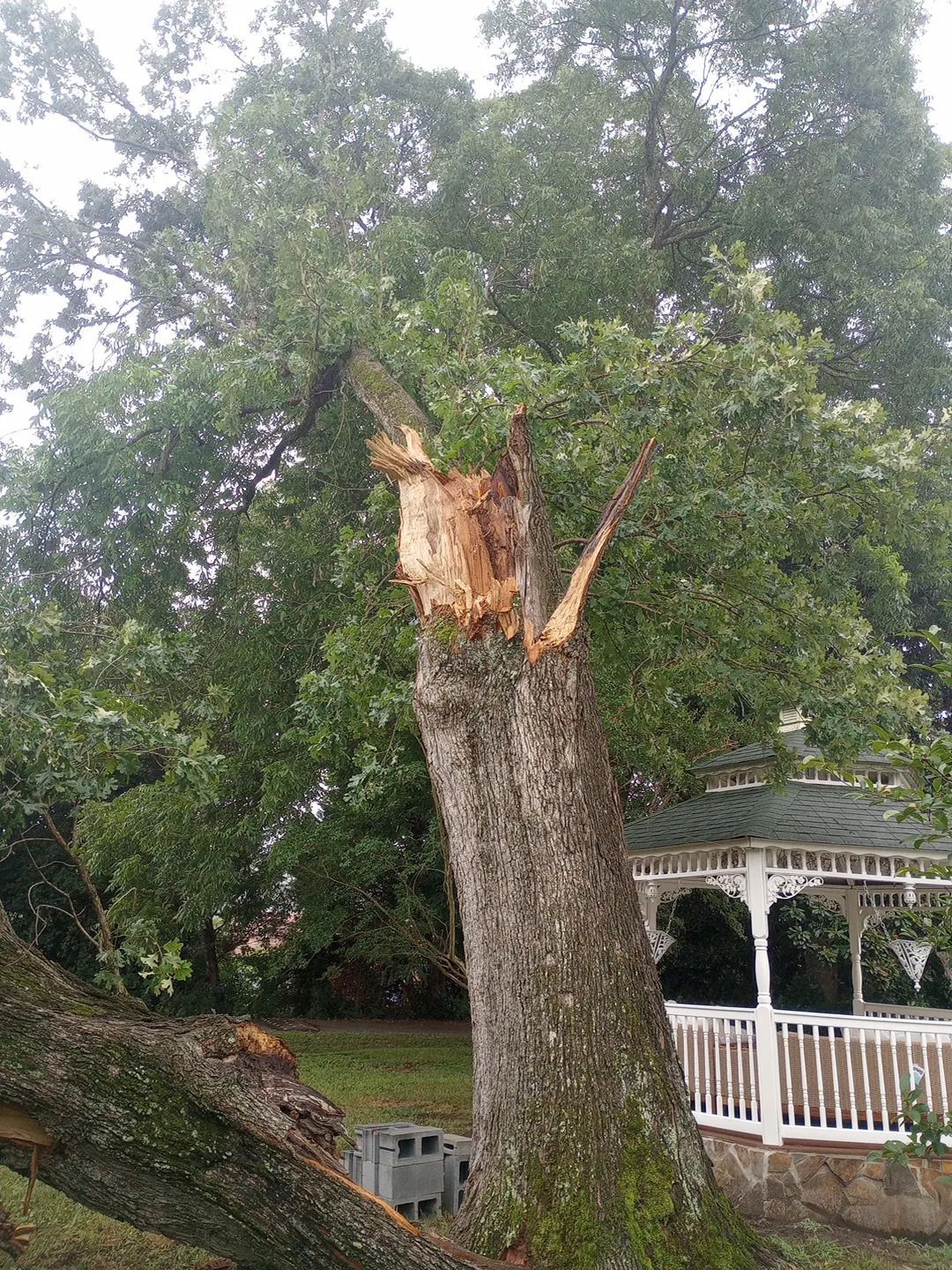
In tree care, a "hazardous tree" is one with a structural defect, disease, or damage that raises the risk of it falling, dropping large limbs, or failing unexpectedly. Not every leaning or aging tree is an emergency, but certain signs mean a tree needs a professional look right away, especially near a home, driveway, fence, or power line.
5 Warning Signs of a Hazardous Tree
1. A Noticeable Lean That's New or Getting Worse
Some trees grow at a natural lean their whole lives without issue. The warning sign is a lean that's new, or one that's increased recently, especially after a storm or heavy rain. A new or worsening lean can mean the root system has been compromised.
2. Dead or Missing Bark, and Large Dead Branches
Patches of missing bark, dead branches scattered through the canopy, or a section of the tree with no leaves while the rest is healthy are all signs of decline. Dead wood is brittle and far more likely to break and fall without warning, especially in wind or storms.
3. Mushrooms, Fungus, or Cavities on the Trunk or Base
Fungus growing on the trunk or around the base, or a visible cavity or hollow section, often signals internal decay. A tree can look healthy in the canopy while the trunk is no longer able to reliably support its own weight.
4. Cracks or Splits in the Trunk or Major Limbs
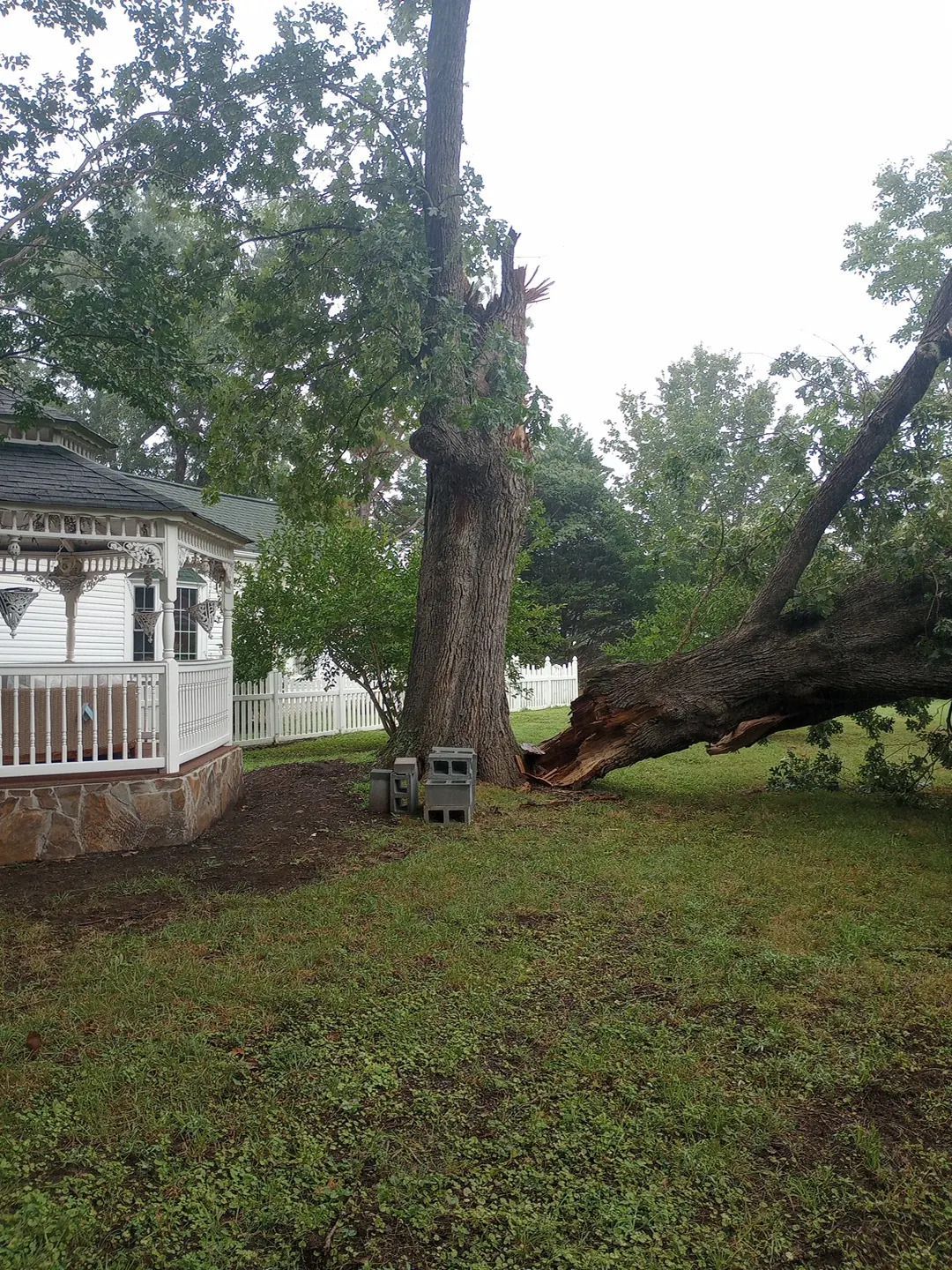
A vertical crack, split, or seam in the trunk or a major limb is one of the more serious warning signs. It usually means the wood's structural integrity is already compromised, even if the tree still looks fine from a distance.
5. Roots That Are Damaged, Exposed, or Lifting
Construction work, storm saturation, and soil erosion can all expose or damage a tree's root system. Roots that are cut, heaving out of the ground, or visibly damaged can mean the tree no longer has the support it needs to stay upright.
When In Doubt, Have It Looked At — Not Every Risk Is Obvious
Some of the most dangerous trees look fine from the driveway. If you've noticed any of the signs above, or you're just not sure, we'll take a look and give you a clear, honest answer, not a scare tactic.
What To Do If You Spot a Hazardous Tree
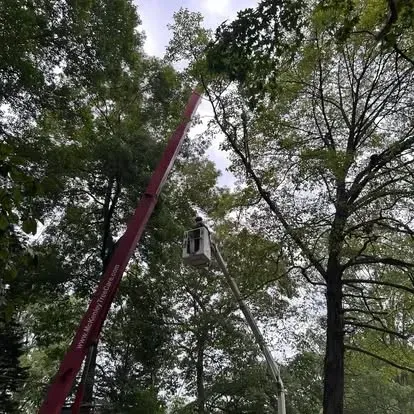
If you notice any of these signs on a tree near your home, driveway, or a spot where people walk or park, don't wait for the next storm to find out how serious it is. Keep people and vehicles clear of the area and call for a professional evaluation. Large or hazardous trees close to a house, fence, or power line often call for crane-assisted removal rather than a standard climb-and-cut approach — a controlled lift keeps the job safe without the property damage a rushed removal can cause. If a tree has already come down or is actively failing, that's a job for 24/7 emergency tree service, not a next-week appointment.
Why In-House Crane Equipment Matters for Hazardous Removals
Hazardous trees are often the hardest ones to remove safely — close to a house, leaning toward a fence or power line, or too unstable to climb safely. McKenley Tree Care owns our crane equipment rather than renting it job-by-job, so a controlled lift is available for the trees that need it most, without the delays or added cost of a rental. That in-house capability is one of the main things that separates a properly done removal from a rushed one.
What Salisbury & Concord Homeowners Are Saying
★★★★★
Janet Hogan · Google Review
"I highly recommend McKenley Tree Care. My big, beautiful elm that covered and shaded my home for years, started dying. I was concerned that the huge dead limbs could fall and damage my roof/home. I called around and got estimates from several companies. I contacted Austin, he came and gave me an awesome quote to remove my tree with his crane, said they would clean up my roof and yard before they left. I hired him, he and his crew came and safely cut down the tree, cleaned up all the debris as promised. I couldn't be happier with this company! Thank you to Austin and the crew for a job well done at a great price !!!"
Read all our
Google reviews.
Frequently Asked Questions
How do I know if a tree is actually dangerous or just needs trimming?
Look for the signs above — a new or worsening lean, dead branches or missing bark, fungus or cavities on the trunk, cracks or splits, or damaged/exposed roots. If you see one or more of these, it's worth a free evaluation rather than guessing. Trees that just need trimming don't usually show these signs.
Does a leaning tree always mean it needs to come down?
Not always — some trees have a natural, stable lean. The concern is a lean that's new or has visibly increased, especially after a storm. An in-person look is the only reliable way to tell the difference.
What should I do if a tree falls or is actively failing during a storm?
Keep everyone clear of the area and call our 24/7 emergency tree service line right away — don't wait for regular business hours. See our emergency tree service page for what to expect.
Do you offer free evaluations for hazardous trees?
Yes, we provide a free, no-obligation estimate for tree removal, including hazardous-tree evaluations. Request one through our contact page or call (704) 652-8152.
Why does a hazardous tree near my house need a crane instead of a regular climb-and-cut removal?
Trees close to a home, fence, or power line carry more risk with a standard climb-and-cut approach. Our in-house crane lets us lift sections out in a controlled way, which protects your property and keeps the crew safer on the harder jobs. See our crane tree removal services.
Think You Might Have a Hazardous Tree? Let's Take a Look.
Tell us about the tree and we'll get back to you with a free, no-obligation evaluation, usually within one business day.